
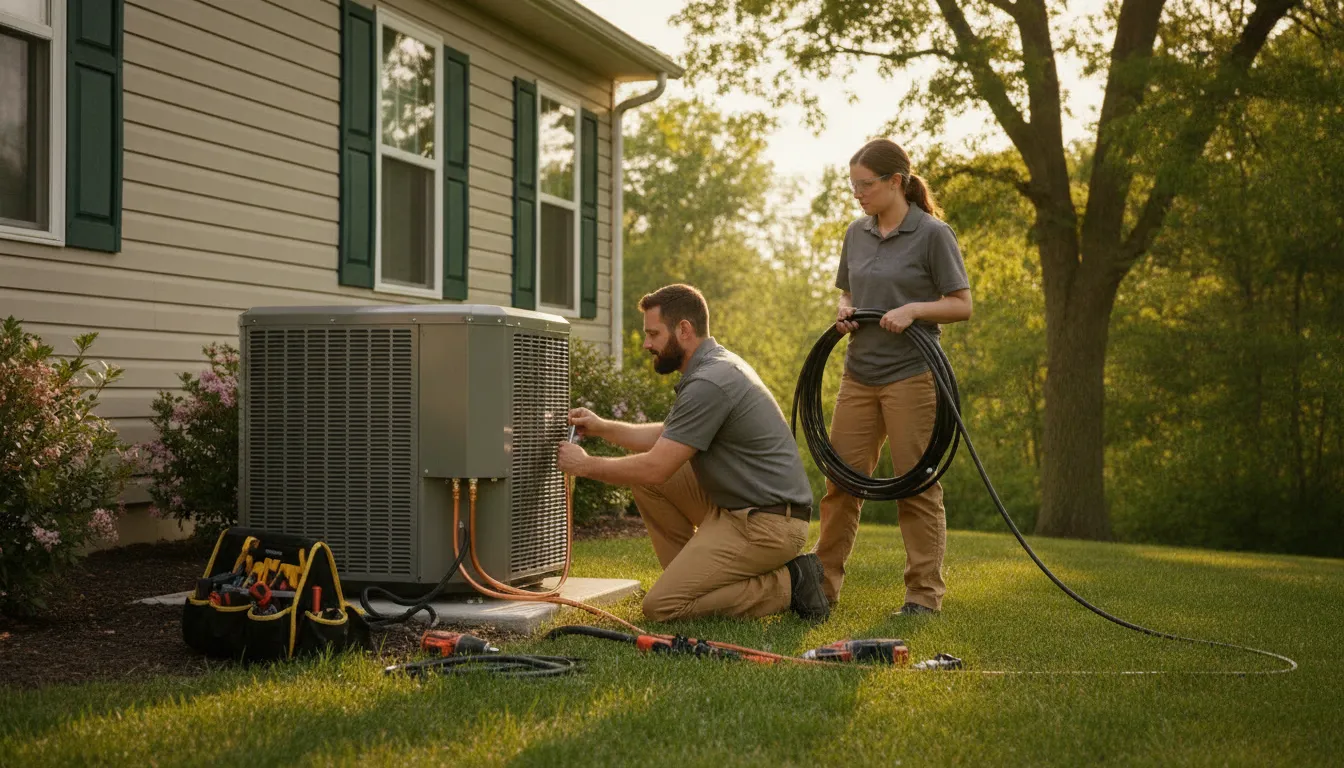
Replacing an aging HVAC system is a major household decision, and the equipment price is only one part of the total investment. In San Antonio, the right heat pump can provide both heating and cooling, but your home’s layout, existing ductwork, and efficiency goals all affect the final quote.
Get a free heat pump installation estimate from Modern Air Systems today.
The heat pump installation cost san antonio homeowners should plan for depends on system type, home size, SEER2 efficiency, brand, and whether ductwork repairs are needed. A professional evaluation is the only reliable way to turn those variables into an accurate estimate, especially when replacing equipment or changing the home’s heating and cooling setup.
Heat pumps transfer heat instead of generating it, which helps explain why they can work efficiently through San Antonio’s hot summers and generally mild winters. Before comparing equipment tiers, start with the practical factors that shape your installation price and learn what should be included in a transparent quote. For background on efficiency and system choices, see our professional heat pump installation guide.
What Factors Determine Heat Pump Installation Cost in San Antonio
Two San Antonio homes can need very different heat pump installations, even when the homeowners ask for the same equipment. The final proposal reflects the condition of the home, the performance level selected, and the work required to install the system safely. A trustworthy estimate should explain those variables rather than present a one-size-fits-all price.
Home size and heating and cooling load
Square footage is an important starting point, but it is not the only measure of system size. An installer should evaluate the home’s heating and cooling load, including insulation, window exposure, ceiling height, air leakage, and the layout of the living space. A unit that is too small may struggle during San Antonio’s hottest afternoons. One that is oversized may cycle too often, control humidity poorly, and wear unnecessarily. Proper sizing helps the equipment deliver steady comfort without paying for capacity the home does not need.
SEER2 efficiency and equipment tier
The heat pump’s SEER2 rating affects both the equipment selection and its expected cooling efficiency. Higher-efficiency models generally include more advanced components and may cost more to install. But they can be worth considering when long-term energy use, comfort, and planned time in the home matter. The right choice depends on the home’s load, usage patterns, utility costs, and available budget. Compare efficiency ratings alongside the complete system design, not as an isolated number. For broader context, review this heat pump efficiency guide.
Brand, model, and system features
Brand and model tier also influence the proposal. A basic single-stage system, a two-stage model, and a variable-speed system do not provide the same operating behavior or controls. Features such as quieter operation, improved airflow management, communicating controls, and enhanced cold-weather performance can change the equipment and labor requirements. The best selection should match the home’s comfort goals and electrical setup, rather than defaulting to the most expensive tier.
Ductwork, line sets, and electrical work
Existing ductwork can lower the scope of an installation when it is correctly sized, sealed, and in sound condition. Repairs, insulation, modifications, or replacement add labor and materials because the duct system must distribute air effectively throughout the home. This is one reason installation costs vary significantly with square footage, SEER2 efficiency, brand, and needed ductwork repairs, as documented in the company’s cost guidance.
Installation complexity matters beyond the ducts. The technician may need to plan a longer refrigerant line-set route, work around tight attic or crawl-space access. Install a new pad or disconnect, upgrade electrical components, or coordinate required permits and inspections. Homes without usable ductwork may call for a ductless design instead, which changes the equipment and installation approach. Ask for these conditions to be listed clearly in the estimate so you can compare proposals on the same scope of work.
Single-Stage vs. Two-Stage vs. Variable-Speed Heat Pump: Cost Differences
The efficiency tier you choose affects more than the equipment line on an installation proposal. It also influences how steadily the system runs, how much control it provides during San Antonio’s long cooling season. And what you may spend to operate it over time. A lower-tier system can reduce the initial investment, while a higher-tier system may provide quieter. More consistent comfort and better efficiency when the equipment is properly sized and installed.
Heat pumps transfer heat rather than generate it, allowing one system to provide heating and cooling. In San Antonio, that flexibility matters because homes need dependable cooling through hot summers while heating demand is generally lighter and more intermittent. The right tier depends on your home’s load, ductwork, comfort priorities, and how long you expect to remain in the property.
| Efficiency tier | How it works | Typical fit | Price direction |
|---|---|---|---|
| Single-stage | The compressor runs at one primary capacity, turning on and off to meet the thermostat setting. | Budget-conscious homeowners, rental properties, or homes with straightforward comfort needs. | Usually the lowest upfront equipment tier, with less operating flexibility. |
| Two-stage | The compressor can operate at a lower capacity for moderate demand and increase output when conditions require it. | Homeowners who want steadier temperatures, improved humidity control, and a balance between initial and operating costs. | Typically costs more upfront than single-stage equipment and may reduce cycling and energy waste. |
| Variable-speed inverter | The compressor adjusts its output across a broad range, matching capacity more closely to the home’s changing load. | Homeowners prioritizing quiet operation, precise comfort, and long-term efficiency. | Generally the highest upfront tier, with potential for lower operating costs when matched to the home and used over time. |
These tiers are useful for comparing proposals, but efficiency labels alone should not determine the decision. A variable-speed system cannot compensate for incorrect sizing, restricted airflow, leaky ducts, or poor commissioning. Installation complexity, home square footage, SEER2 rating, brand, and needed ductwork repairs all affect the final scope. Those factors can matter as much as the compressor design when comparing heat pump installation cost san antonio homeowners will actually face.
Ask the contractor to explain the expected operating behavior, maintenance needs, warranty terms, and compatibility with your existing electrical and duct systems. A two-stage model may be the practical middle ground for one San Antonio home. While a variable-speed inverter may better serve another with uneven temperatures or strict noise preferences. The best value is the system tier that fits the home’s measured demand, your comfort goals. And your expected time in the house, not simply the model with the most advanced specifications.
Federal Tax Credits That Reduce Your Out-of-Pocket Cost
Federal incentives may help reduce the net cost of a qualifying heat pump installation, but the credit is separate from the contractor’s invoice. Under the IRS Energy Efficient Home Improvement Credit. Homeowners may be eligible to claim 30% of the cost of a qualifying air-source heat pump, up to a maximum credit of $2,000. The credit is available for eligible improvements placed in service through 2032, subject to the requirements and limitations described by the Internal Revenue Service.
That distinction matters when you are comparing heat pump installation cost in San Antonio. A tax credit does not automatically lower the amount due on installation day. Instead, an eligible homeowner generally claims the credit when filing the appropriate federal tax return. Your tax situation, the date the equipment is placed in service, and the product’s certification can all affect whether the improvement qualifies.
Choose equipment that meets the eligibility requirements
Not every heat pump automatically qualifies. The equipment must meet the applicable efficiency and product requirements, so ask for the exact model information before approving the installation. The ENERGY STAR air-source heat pump directory is a useful reference for identifying products that meet ENERGY STAR criteria. Your HVAC contractor should also be able to provide the manufacturer’s product details and any documentation needed for your records.
It is worth reviewing the equipment choice alongside the home’s comfort needs. Heat pumps use electricity to transfer heat rather than generate it, allowing one system to provide both heating and cooling. In San Antonio, that can make the comparison about more than the initial purchase. System capacity, efficiency rating, ductwork condition, and installation requirements still influence the total project scope and long-term operating value.
If you are weighing different systems, review this guide to heat pump vs AC vs furnace before settling on a configuration. The right choice depends on your home’s layout, existing equipment, comfort priorities, and budget, not just the availability of a tax incentive.
Confirm your eligibility with a tax professional
Tax rules can change, and a contractor cannot determine how a credit applies to your individual return. Before counting the credit in your project budget, consult a qualified tax professional and review the current IRS guidance. Keep your invoice, model information, installation date, and any certification documents supplied by the contractor. Those records can help support your claim if you are eligible and make it easier to evaluate the true after-credit cost of the project.
Ready to compare costs for your home? Call Modern Air Systems for a free estimate and review your options.
What Is Included in a Modern Air Systems Installation Quote
A transparent heat pump installation quote should explain more than the equipment’s name and a final total. It should show how the system was selected, what work will happen in your San Antonio home, and which responsibilities are covered after installation. Modern Air Systems is a family-owned HVAC provider with over 25 years of experience, so the goal is a properly matched installation, not a one-size-fits-all replacement.
The quote should begin with a load calculation. This evaluates the home’s size, layout, insulation, windows, and other conditions to determine the heating and cooling capacity needed. An oversized system may cycle inefficiently, while an undersized system can struggle during San Antonio’s hottest weather. Asking whether a load calculation was completed helps you compare proposals on installation quality, not just equipment labels.
Equipment details and system efficiency
Every proposal should identify the recommended heat pump model, capacity, and efficiency ratings. Look for the specific model numbers rather than a vague phrase such as “high-efficiency unit.” The quote should also explain whether the system uses a matched indoor and outdoor combination. Along with any thermostat or control included in the installation.
Heat pumps use electricity to transfer heat instead of generating it, which helps make them an energy-efficient alternative to separate heating and cooling equipment. The ENERGY STAR air-source heat pump guidance explains how heat pumps transfer heat between the home and outdoors. That approach is well suited to San Antonio’s climate, where one system can provide efficient cooling through hot summers and heating during milder winters.
Installation scope, permits, and warranty
A complete quote should state whether labor and removal of the old unit are included. It should also address the line set, refrigerant connections, condensate drainage, pad or mounting hardware, thermostat, startup testing, and disposal of removed equipment. If the existing ductwork needs repair, the proposal should identify that work separately instead of leaving it as an unexpected charge.
Electrical requirements deserve the same clarity. The installer should explain whether the current disconnect, wiring, breaker, or electrical panel can support the new system, and whether any updates are included. Permits and inspections should be listed as part of the project scope when required. These details protect the homeowner from discovering after installation that essential work was excluded.
Finally, the written quote should spell out labor and manufacturer warranty coverage, registration responsibilities, and who to contact if a problem occurs. It should identify exclusions, payment milestones, and the expected installation schedule. If you are comparing system choices, our guide to is a heat pump worth it in Texas can help you consider the broader fit before selecting equipment.
Technicians and in-home safety
The people performing the work are part of the value of an installation quote. Modern Air Systems emphasizes military-grade safety, with baseline-cleared, background-checked technicians entering customers’ homes. That added accountability matters when an installation involves several hours of access to your home, equipment, and electrical connections. A clear proposal should leave you confident not only about what will be installed. But also about who will install it and how the completed system will be tested.
How to Get a Free Heat Pump Installation Estimate
A reliable estimate starts with an evaluation of your home, not a guess based on a quick phone description. Modern Air Systems offers free estimates for heat pump installations and replacements in San Antonio, so you can understand your options before deciding whether to move forward. The process is designed to give you useful information about system fit, installation requirements, and the work included in the proposal.
When you are ready to discuss your home, call 210-222-0201 to schedule a free in-home estimate. A straightforward conversation with the team can help determine whether a heat pump is an appropriate replacement for your current heating and cooling equipment.
- Contact the team and schedule your appointment. Tell Modern Air Systems that you are considering a heat pump installation or replacement and arrange a convenient time for an in-home visit. You do not need to commit to installation to request the estimate. Having your recent comfort concerns, repair history, or plans for replacing aging equipment available can help make the initial conversation more productive.
- Let an experienced technician evaluate the home. During the visit, the technician can review the existing system, inspect the available installation area, and measure the home. A proper load calculation helps determine the heating and cooling capacity the home actually needs. Correct sizing matters because an oversized or undersized system may not deliver the comfort, humidity control, or efficiency you expect. The technician can also identify conditions such as ductwork repairs that may affect the scope of work.
- Review the clear, itemized quote. Ask the technician to explain the recommended equipment, efficiency characteristics, installation labor, required materials, and any preparation or ductwork work included. An itemized proposal makes it easier to compare the actual scope of two options and understand what is included. If a recommendation is unclear, ask questions before making a decision.
- Schedule installation when you are ready. Once you have reviewed the proposal and selected the option that fits your home and plans, coordinate an installation date with the team. If you need more time, keep the estimate for reference and ask about any details that may need to be confirmed before scheduling. There is no pressure to rush a major home comfort decision simply because you requested a free estimate.
Schedule your free heat pump installation estimate and we will review your home’s needs with you.
Frequently Asked Questions
How much does a heat pump installation cost in San Antonio?
There is no single price that fits every home. The total depends on square footage, the system’s SEER2 efficiency rating, equipment brand, installation complexity, and whether ductwork needs repairs. A professional evaluation is the most reliable way to compare options and understand what your home requires. Modern Air Systems does not publish one-size-fits-all pricing because the right system and installation scope vary by property.
Are heat pumps a good choice for San Antonio weather?
Yes. San Antonio’s hot summers and mild winters are well suited to a heat pump because one system can provide both cooling and heating. Unlike equipment that creates heat, a heat pump transfers heat using electricity, which can make it an efficient alternative to separate heating and cooling equipment. See the ENERGY STAR air-source heat pump guidance for additional technical background.
What factors affect the cost of heat pump installation?
The main factors are the home’s size, the capacity needed, the SEER2 efficiency rating, equipment brand, electrical requirements, and the condition of existing ductwork. A higher-efficiency system may have a different upfront cost, while duct repairs or other site work can change the installation scope. Your estimate should identify these items clearly rather than combine them into an unexplained total.
Can I install a heat pump if my home has no ductwork?
Yes. A ductless mini-split heat pump can provide heating and cooling without existing air ducts, and it can support zone-based comfort. The best configuration depends on the home’s layout, insulation, electrical service, and the rooms you want to condition. An HVAC professional can explain whether ductless equipment or a ducted system is the better fit.
Schedule Your Free Heat Pump Installation Estimate
A personalized estimate can help you understand which heat pump setup fits your San Antonio home and installation needs. Modern Air Systems can review your project and explain the next steps clearly.
Schedule a free heat pump installation estimate by calling our team today.