
If you installed a qualifying heat pump in 2023, 2024, or 2025, you may still claim a federal credit for that earlier installation. Homeowners researching the heat pump federal tax credit 2026 texas rules need current guidance because the federal program no longer covers a new system placed in service during 2026.
Call Modern Air Systems at (210) 222-0201 for help evaluating your heat pump options.
The federal Energy Efficient Home Improvement Credit covered qualifying heat pumps placed in service from 2023 through 2025. The credit was generally 30% of eligible costs, up to $2,000 for a qualifying heat pump. A new system placed in service during 2026 does not qualify for this credit.
The Internal Revenue Service now lists 2023 through 2025 as the applicable period for the Energy Efficient Home Improvement Credit. That makes the 2026 question a deadline and planning question, not a reason to promise a new federal tax break. The IRS also explains who may claim qualifying home improvements and which records homeowners should keep.
Our guide to heat pumps and whole-home efficiency for South Texas homeowners puts equipment choices in context. This article focuses on the former federal credit, the filing process for an earlier installation, current CPS Energy rebates, and what San Antonio homeowners should verify before signing a new installation agreement.
What Is the Heat Pump Federal Tax Credit and Who Qualifies?
The 25C Energy Efficient Home Improvement Credit was a federal income-tax credit for eligible home improvements. A qualifying air-source heat pump placed in service between January 1, 2023 and December 31, 2025 could receive a 30% credit, subject to the heat-pump limit and the equipment rules for that year.
The Energy Efficient Home Improvement Credit is commonly called the 25C credit. For a qualifying air-source heat pump placed in service during 2023, 2024, or 2025, it generally covered 30% of eligible costs. The heat-pump category had a separate annual maximum of $2,000.
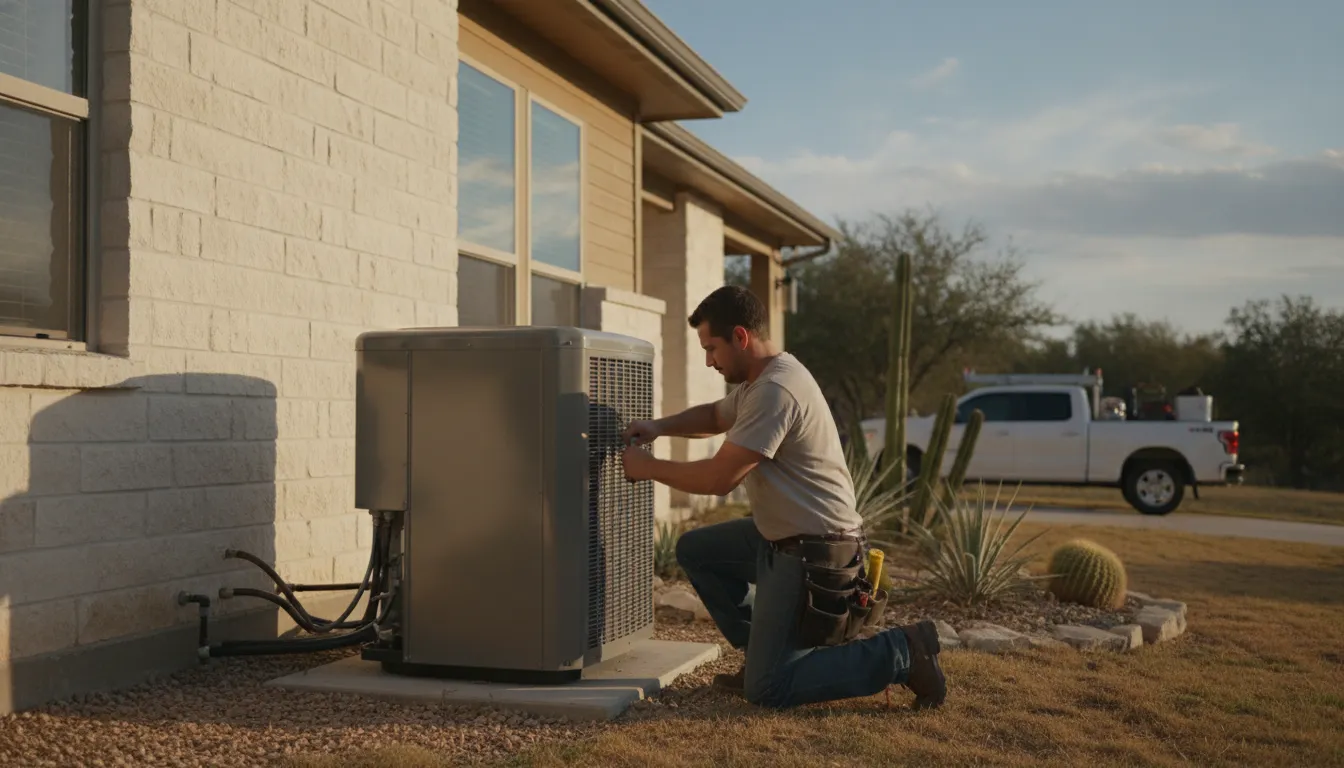
The IRS says primary-residence improvements have the clearest path to eligibility. Renters and owners of second homes used as residences may also qualify in some circumstances. The property must be used as a residence. A contractor cannot determine your personal tax liability, so ask a qualified tax professional about your return.
Equipment also had to satisfy the efficiency standards in effect for the year it was placed in service. For 2025 installations, ENERGY STAR identifies the applicable air-source heat-pump requirements and certification path. A San Antonio location did not create a separate federal standard, but the equipment still needed to meet the federal requirements.
Did the deadline change in 2025?
Yes. Current IRS guidance lists the Energy Efficient Home Improvement Credit for improvements made from 2023 through 2025. A heat pump placed in service on or before December 31, 2025 may be evaluated under the rules for that year. A system placed in service on January 1, 2026 or later does not qualify for this 25C heat-pump credit.
How Much Could You Claim on a Qualifying 2025 System?
A qualifying heat pump placed in service during 2023 through 2025 could receive 30% of eligible costs, up to $2,000 for the heat-pump category. The credit was nonrefundable, so your tax liability and the rules for the installation year affected how much you could use.
For a qualifying system placed in service before 2026, the credit was 30% of eligible costs. Depending on the installation and the applicable IRS rules, eligible costs could include the equipment and certain installation costs. The heat-pump limit was $2,000 per year.
The broader annual limit for the Energy Efficient Home Improvement Credit was $3,200. The IRS separates that limit into a $1,200 category for certain envelope improvements and equipment, plus a $2,000 category for heat pumps, heat-pump water heaters, and biomass equipment. A qualifying heat pump could not receive more than the $2,000 category limit.
- 30%: the general credit percentage for qualifying improvements made during 2023 through 2025.
- Up to $2,000: the annual limit for qualifying heat pumps.
- Up to $3,200: the broader annual limit when other eligible improvements also qualify.
- Nonrefundable: the credit generally reduces federal income tax owed rather than creating a payment beyond that liability.
Consider a San Antonio example. If an eligible 2025 heat-pump project had $6,700 in eligible costs, 30% would be $2,010. The $2,000 heat-pump limit would cap the credit at $2,000. If eligible costs were $4,500, 30% would be $1,350. Keep the contractor invoice and manufacturer documentation with your tax records.
These examples explain the math, not your final tax result. The installation date, equipment eligibility, eligible-cost definition, and tax liability all matter. Review the current IRS materials or consult a tax professional before filing.
What Efficiency Requirements Applied to Qualifying Equipment?
Federal eligibility was based on the standards and certification requirements for the installation year. For 2025, an eligible air-source heat pump needed the applicable ENERGY STAR Most Efficient and CEE qualification. A single SEER2 number by itself was not a complete federal-credit test.
For 2023 through 2025, eligibility did not rest on one universal SEER2 number. The installed system had to meet the rules in effect when it was placed in service. Those rules became more specific for 2025 equipment.

ENERGY STAR identifies the 2025 air-source heat-pump requirements, including the applicable Most Efficient designation and CEE efficiency tier. Use the official ENERGY STAR air-source heat-pump guidance rather than relying on a sales claim or a single rating printed on an estimate.
| Checkpoint | Federal credit review | CPS Energy heat-pump rebate review |
|---|---|---|
| Certification | Use the requirements for the installation year and verify the applicable ENERGY STAR and CEE status. | Confirm the current CPS Energy program requirements before purchase. |
| SEER2 | No single SEER2 figure replaces the federal certification rules. | Current specifications list 14.3 SEER2 for the listed heat-pump tier. |
| EER2 | No standalone EER2 number is a complete federal-credit test. | Current specifications list 11.7 EER2 for the listed heat-pump tier. |
| HSPF2 | Use the applicable federal product qualification. | Current specifications list 7.5 HSPF2 for the listed heat-pump tier. |
A model can satisfy a utility rebate minimum without satisfying a federal tax-credit requirement. The reverse can also be true. Ask for the matched system information, including the indoor coil and outdoor unit, and keep the AHRI certificate when the program requires one. CPS Energy says its rebate review verifies the equipment against the corresponding certificate.
Our guide on choosing the right heat pump system for a San Antonio home compares heat-pump, air-conditioning, and furnace options. The right equipment decision should consider comfort, capacity, efficiency, installation quality, and available incentives together.
How Does the Heat Pump Federal Tax Credit Apply to Texas Filings in 2026?
If a qualifying heat pump was placed in service during 2025, claim it for the 2025 tax year. Gather the invoice and eligibility records, complete the current IRS Form 5695, and transfer the allowable amount to your federal return. A 2026 installation is not claimed as a 2025 credit.
If your qualifying heat pump was placed in service by December 31, 2025, the relevant return is the 2025 federal return. The normal federal filing deadline for many individuals is April 15, 2026, but your filing circumstances may differ. Check the current IRS filing information.
- Confirm the placed-in-service year. Verify that the equipment was placed in service during 2023, 2024, or 2025. Installation planning or a deposit alone does not establish the placed-in-service date.
- Match the equipment records. Gather the model number, serial number, manufacturer certification statement, AHRI information when applicable, and contractor invoice.
- Review the IRS rules for that year. Read the current IRS home energy tax-credit guidance and the relevant Form 5695 instructions.
- Complete Form 5695. Report only the eligible costs supported by your records and apply the applicable annual limit.
- Carry the allowable amount to your federal return. Review the current Form 1040 instructions or ask a tax professional to confirm the correct filing treatment.
If you missed a qualifying 2023 or 2024 claim, do not assume the opportunity is lost. An amended-return question depends on your individual filing history and the applicable limitation period. The IRS Form 5695 page provides the form and related instructions.
Call Modern Air Systems at (210) 222-0201 to review your heat pump documentation before you file.
What Does the 2026 Calendar Year Mean for New Installations?
For a new heat pump placed in service during 2026, the federal 25C heat-pump credit is not available under the current IRS 2023 through 2025 schedule. San Antonio homeowners can still compare system costs and check current utility or state-administered programs.
The most important 2026 planning point is simple: do not build a new heat-pump purchase around a federal 25C credit. Current IRS guidance identifies 2023 through 2025 for this credit. A system placed in service during 2026 should be evaluated using its operating benefits, project cost, financing terms, and currently available local incentives.
That does not mean every incentive has ended. CPS Energy publishes separate HVAC rebate rules for qualifying customers and equipment. Texas also has state-administered energy programs whose funding, income rules, administrators, and application windows can change. Check the current official program page before assuming a rebate is open.
If you are weighing a new system without the federal credit, our guide on whether a heat pump is worth it in Texas compares comfort and operating considerations. Our heat pump installation cost guide for San Antonio helps you identify the factors that shape a project estimate.
Before approving a 2026 installation, ask for the equipment model, efficiency ratings, capacity, scope of work, permit responsibilities, and any program documentation. A written estimate should separate equipment and installation details from incentives. That makes it easier to verify the final price if program rules change.
How Can San Antonio Homeowners Check CPS Energy Rebates?
CPS Energy currently lists HVAC rebates for qualifying heat pumps, with published amounts ranging from $90 to $310 per cooling ton. Eligibility depends on the program path, equipment, documentation, and current rules. Verify the live CPS Energy requirements before signing an agreement.
CPS Energy’s current HVAC rebate page lists heat-pump rebates from $90 to $310 per cooling ton. The exact amount depends on the program pathway and equipment tier. The specifications page lists separate Early Replacement and Replace on Burnout rules, along with the documentation needed for review.
Current CPS Energy specifications list a heat-pump checkpoint of 14.3 SEER2, 11.7 EER2, and 7.5 HSPF2 for the listed tier. The specifications also say that the AHRI certificate must match the new system and that model and serial numbers should appear on the contractor invoice. Projects within San Antonio city limits may require a permit number.
Review the CPS Energy HVAC rebate page and the CPS Energy HVAC rebate specifications before purchase. Program details can change, and the utility makes the final eligibility decision.
Texas has no state individual income tax. A homeowner therefore should not expect a Texas income-tax credit comparable to the federal home-improvement credit. Other energy programs may still exist, including state-administered programs. The Texas Comptroller’s IRA rebate information is the appropriate place to check current state program status.
Frequently Asked Questions
Is there still a federal tax credit for heat pumps in 2026?
Not for a new heat pump placed in service during 2026 under the current 25C schedule. The IRS lists qualifying home improvements made during 2023 through 2025. A qualifying earlier installation may still be claimed for its installation year. Check current IRS guidance before filing.
How much could I claim for a qualifying heat pump?
The former credit generally covered 30% of eligible costs, up to $2,000 for a qualifying heat pump. The broader annual home-improvement limit could reach $3,200 when other eligible categories applied. Your equipment, installation year, eligible costs, and tax liability determine the usable amount.
Can I claim the credit on my 2026 tax return?
You may file during 2026 for a qualifying heat pump placed in service during 2025. That is a 2025 tax-year claim, not a credit for a system placed in service during 2026. Use the current Form 5695 instructions and ask a tax professional about your filing situation.
Does Texas have a state tax credit for heat pumps?
Texas does not impose a state individual income tax, so there is no Texas income-tax credit comparable to the former federal home-improvement credit. San Antonio homeowners can still review CPS Energy rebates and any current state-administered energy programs.
How do I claim a qualifying 2025 heat pump?
Gather your invoice, placed-in-service information, model details, and manufacturer documentation. Complete the current IRS Form 5695 for the 2025 tax year and carry the allowable amount to your federal return. Keep all records and consult a tax professional if your situation is unusual.
Discuss Your Heat Pump Options With a San Antonio Professional
A local evaluation can help you compare heat-pump choices, installation requirements, and current utility incentives. Modern Air Systems has over 25 years of experience helping homeowners review HVAC options. To discuss a replacement or confirm estimate details, call Modern Air Systems at (210) 222-0201.