If you live in San Antonio, your air conditioner doesn’t exactly have an easy job.
Long summers, stretches of triple-digit temperatures, high cooling demands, dust, humidity, and sudden Texas weather changes can put considerably more stress on an HVAC system than it might experience in a milder climate.
That’s why homeowners in San Antonio often find themselves asking the same questions:
How long should an AC system last in San Antonio? Is it worth repairing an older unit? And how do you know when it’s finally time for HVAC replacement?
At Modern Air Systems, these are questions we hear regularly. While there isn’t one answer that applies to every home, understanding how our local climate affects your equipment can help you make a better decision.
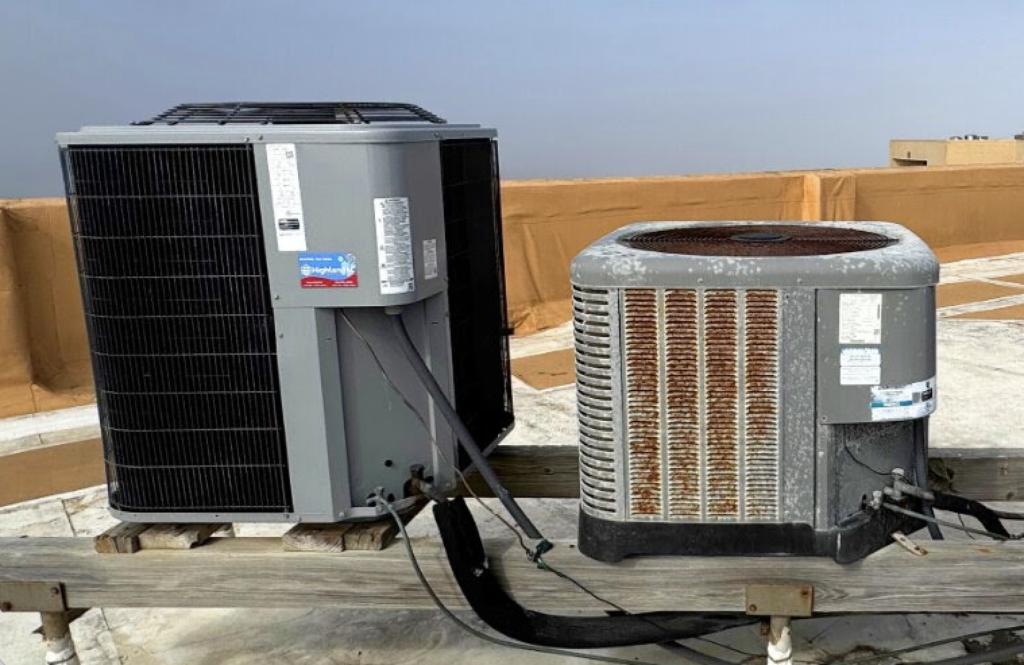
Why HVAC Systems Work So Hard in San Antonio
Air conditioners are designed to run for extended periods, but San Antonio puts them to the test.
During the hottest part of the year, your AC may run for hours at a time trying to maintain a comfortable indoor temperature. Even evenings can remain warm enough that the system gets relatively little relief.
That extended runtime affects components throughout the system, including the compressor, blower motor, capacitors, coils, and electrical components.
And heat isn’t the only challenge.
San Antonio HVAC systems also have to deal with airborne dust, pollen, changing humidity levels, and the dramatic temperature swings South Texas occasionally throws our way.
The result is simple: your HVAC system is one of the hardest-working pieces of equipment in your San Antonio home.
How Long Does an AC System Last in San Antonio?
Many central air conditioning systems can last around 10 to 15 years, and some continue operating longer with proper maintenance.
But age alone doesn’t tell the whole story.
A well-maintained system that was properly sized and installed may perform reliably for years. Another system of the same age may struggle because of heavy use, poor airflow, neglected maintenance, installation problems, or previous component failures.
In San Antonio, the amount of work the system performs every summer is particularly important.
That means a 12-year-old air conditioner in South Texas may have experienced significantly more operating hours than a similar system in a cooler part of the country.
7 Signs Your San Antonio HVAC System May Be Nearing Replacement
An AC problem doesn’t automatically mean you need a new system. Many problems can be repaired.
However, several issues occurring together can indicate that it’s worth discussing replacement.
1. Your AC Is Running Almost Constantly
During extremely hot San Antonio afternoons, longer cooling cycles are normal.
But if your system rarely shuts off even during moderate weather, something may be wrong.
The cause could be relatively simple, such as an airflow issue, but constant operation can also indicate that an older system is losing its ability to keep up with your home’s cooling load.
2. Certain Rooms Never Seem Comfortable
Does the living room feel great while a back bedroom stays hot?
Uneven cooling can come from ductwork, insulation, airflow, thermostat placement, equipment sizing, or the HVAC system itself.
San Antonio homes vary enormously in age and construction, so diagnosing the cause rather than simply replacing equipment is important.
3. Your Energy Bills Keep Increasing
Higher electric bills aren’t automatically an HVAC problem. Utility rates, weather, and household usage all affect monthly costs.
But if your cooling costs have steadily increased while your habits haven’t changed much, declining HVAC efficiency may be contributing.
Older equipment often has to operate longer to provide the same amount of cooling.
4. You’re Calling for AC Repairs More Often
One repair isn’t necessarily concerning.
Repeated repairs are different.
If you’re repairing an aging system several times and another major component fails, it may be worth comparing the cost of another repair against the cost and expected lifespan of replacement equipment.
5. The System Struggles During San Antonio’s Hottest Weather
A properly functioning HVAC system should be able to keep your home reasonably comfortable during normal summer conditions.
Extreme heat can challenge almost any system, but persistent inability to cool the house may indicate a larger problem.
Before assuming you need replacement, a technician should evaluate factors such as refrigerant performance, airflow, ductwork, insulation, equipment condition, and system sizing.
6. Your HVAC System Is 10–15+ Years Old
Age doesn’t mean automatic replacement.
If your system is still cooling effectively, isn’t requiring frequent repairs, and your energy costs remain reasonable, there may be no reason to replace it simply because it reached a particular birthday.
However, once equipment reaches this range, major repairs deserve a closer look.
7. Your Home Feels Humid or Uncomfortable Even When It’s Cool
Temperature is only one part of indoor comfort.
Your HVAC system also affects indoor humidity and air movement. A house can technically reach the thermostat setting and still feel uncomfortable.
Improper sizing, short cycling, airflow problems, or aging equipment can all contribute.
Repair or Replace? It Depends on the System
One of the biggest mistakes homeowners can make is assuming every problem with an older air conditioner means it needs to be replaced.
It doesn’t.
Sometimes a repair is clearly the better option.
If the system is otherwise in good condition and the problem involves a relatively inexpensive component, repairing it may provide several more years of dependable service.
Replacement becomes more worth considering when you’re combining factors such as:
- Older equipment
- Frequent service calls
- Expensive repairs
- Poor cooling performance
- Increasing energy consumption
- Major component failure
- Comfort problems throughout the home
A good HVAC contractor should help you understand both options rather than automatically pushing you toward new equipment.
HVAC Replacement Should Start With the House — Not Just the Old Unit
When homeowners replace an HVAC system, it can be tempting to simply install another unit with the same capacity as the old one.
That isn’t always the best approach.
Your home’s cooling requirements depend on factors including its square footage, insulation, windows, orientation, air leakage, ductwork, ceiling height, and other characteristics.
This becomes especially important in San Antonio because our cooling season is so demanding.
Proper equipment sizing can affect comfort, efficiency, humidity control, equipment lifespan, and operating costs.
Bigger isn’t automatically better.
An oversized air conditioner may cool the home quickly but cycle on and off too frequently. An undersized system may struggle to keep up during the summer.
The goal is the right HVAC system for the home.
HVAC Needs Can Vary Across San Antonio
One reason local experience matters is that San Antonio doesn’t have one single type of housing.
Older homes around Alamo Heights, Terrell Hills, Monte Vista, and central San Antonio can present very different HVAC challenges than newer construction in communities around Stone Oak, Shavano Park, Leon Springs, Helotes, or far North San Antonio.
Older properties may have aging ductwork, additions built at different times, limited insulation, or equipment that has been modified over the years.
Newer homes can have different challenges involving system sizing, zoning, airflow, or high cooling loads.
Understanding the house is just as important as understanding the equipment.
Can a New HVAC System Lower Your Electric Bill?
Potentially, yes.
Modern HVAC equipment can be considerably more efficient than older systems, particularly when replacing equipment that has been operating for well over a decade.
But efficiency ratings aren’t the only factor.
Actual energy use also depends on installation quality, equipment sizing, duct condition, insulation, thermostat settings, outdoor temperatures, and how the home is used.
That’s why replacing the outdoor unit alone shouldn’t be viewed as a magic solution to high energy bills.
The HVAC system works as part of the entire home.
What Is the Best HVAC System for a San Antonio Home?
There isn’t one brand, model, or efficiency rating that’s best for every homeowner.
The right system depends on the house, budget, comfort priorities, existing equipment, and how long you expect to remain in the property.
For some homeowners, the priority is maximum efficiency.
For others, reliability and straightforward operation matter more.
Some households may benefit from variable-speed equipment or zoning, while another home may be perfectly comfortable with a simpler system.
The best place to start is with an evaluation of the home and existing HVAC equipment.
Don’t Wait Until the AC Completely Stops
In San Antonio, an air conditioning failure in July or August isn’t a minor inconvenience.
Planning ahead gives you more time to understand your options instead of making a major purchase while your house is getting hotter by the hour.
If your HVAC system is getting older, struggling during hot weather, or requiring increasingly frequent repairs, having it evaluated before complete failure can make the replacement decision much easier.
San Antonio HVAC Service From Modern Air Systems
Modern Air Systems provides heating and cooling services for homeowners throughout San Antonio and surrounding communities.
From diagnosing cooling problems and maintaining existing equipment to helping homeowners determine when AC replacement makes sense, our goal is to help you find the right solution for your home rather than treating every HVAC problem the same way.
We serve homeowners throughout San Antonio and surrounding areas, including Alamo Heights, Terrell Hills, Stone Oak, Shavano Park, Leon Springs, Helotes, Castle Hills, and nearby communities.
If your air conditioner is struggling to keep up with the San Antonio heat, Modern Air Systems can evaluate the system and help you understand your options.
Frequently Asked Questions About HVAC Systems in San Antonio
How long does an air conditioner typically last in San Antonio?
Many systems operate for approximately 10–15 years or longer, but lifespan depends heavily on installation quality, maintenance, operating hours, equipment condition, and how hard the system has worked during San Antonio summers.
Should I replace my AC if it’s more than 10 years old?
Not necessarily. Age is only one factor. If an older system still operates reliably and efficiently, replacement may not be necessary. Frequent repairs, major component failures, poor comfort, and increasing operating costs can make replacement more worth considering.
Why does my AC run constantly during the summer in San Antonio?
During extreme heat, longer cooling cycles can be normal. Constant operation can also result from dirty filters, airflow restrictions, duct problems, low system performance, insulation issues, improper sizing, or equipment problems.
Is a bigger AC system better for a San Antonio home?
No. Oversized HVAC equipment can create short cycling and humidity-control problems. Proper sizing should be based on the home’s actual cooling requirements.
When is the best time to replace an HVAC system in San Antonio?
You can replace HVAC equipment at any time of year, but planning replacement before complete failure gives you more time to compare equipment and make a considered decision rather than dealing with an emergency during peak summer heat.
Learn more about all of our HVAC services in San Antonio.